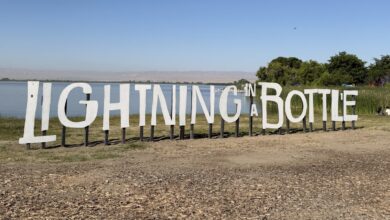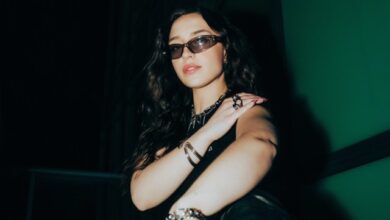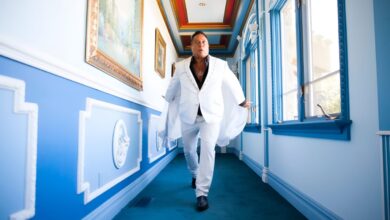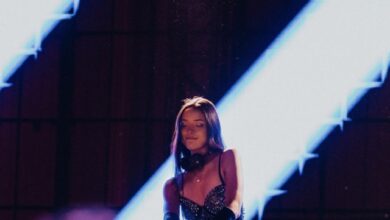
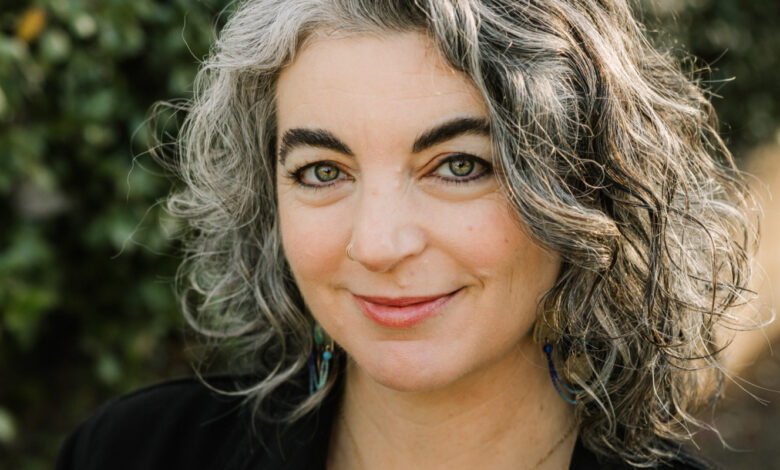
As the lead talent buyer behind both Lightning in a Bottle and the iconic Do LaB stage at Coachella Valley Music and Arts Festival, Megan Perez-Carpenter has become one of the most influential curators shaping the modern festival landscape. From discovering emerging artists years before they break into the mainstream to intentionally pushing for more equitable festival lineups, Perez-Carpenter approaches booking with a balance of instinct, community awareness, and creative experimentation.
LIANA: For people who may not realize how much work goes into creating a festival like this, what does your role actually look like day-to-day?
MEGAN: My title is Senior Producer of Music and Content, which is honestly a huge umbrella. I book the music for Lightning, Woogie, and Thunder stages, curate the Crossroads crew nights, and this year I also programmed a new area called the Moon Room, which is more of an ambient late-night lounge experience. But beyond music, I oversee all the other content too — the yoga classes, workshops, family programming, art spaces, basically anything creative happening on-site touches my world in some way.
We’re also a really small company, so I’m involved in everything from the initial booking conversations to contracting, advancing, and all the outward-facing communication. It’s a lot, but we really only do two major events a year, so it’s basically nonstop.
LS: How early does the booking process actually start?
MPC: Honestly, almost immediately. Last year I got home from the festival, unpacked, refreshed all my documents, and immediately started thinking about the next year. I already have ideas for headliner offers in my head now. As soon as I get home and get a little sleep, I’ll jump right back into it.
LS: You’ve been part of LIB for a long time now. What’s that evolution been like for you personally?
MPC: My first LIB was in 2011 when I was the artist relations manager, so I really grew up in this world with these people who are now basically family to me. Jesse Fleming, one of the festival owners, used to handle the music programming himself before I joined him, and now the two of us are the music team together. We do Lightning in a Bottle, but we also handle the Do LaB stage at Coachella, so it’s a really small but mighty operation.
LS: There’s been a lot of conversation recently around diversity in festival booking. How do you think the industry is evolving and what still needs to improve?
MPC: It’s a really big issue because the industry honestly still isn’t set up for that. I receive artist submissions from agents all the time and a lot of them are still overwhelmingly white male artists. So from the very beginning of my programming, I make equity part of the process. I track everyone I’m booking because if it’s not intentional from the beginning, you’re probably not going to achieve the result you want.
I think sometimes people build an entire lineup and then realize they forgot to include women or people of color, so they try to squeeze artists in afterward. Audiences can feel when that doesn’t feel genuine.
Something I’m really proud of with LIB is that I never book someone because of their identity. I book music that I genuinely love, but I’m committed to finding that music across a really wide spectrum of artists.
LS: Some people assume there has to be a sacrifice in quality to create a more equitable lineup. What is your response to that?
MPC: Exactly, and that’s completely untrue. Every artist on the lineup is there because they’re incredible artists. It just also happens to be a diverse lineup.
A couple years ago, I actually got so frustrated that I started sending artist lists back to agents if they only included white men. I’d say, ‘Thank you for your time, but I’m not reviewing this until you add women, people of color, trans artists.’ If my goal is gender parity and you’re sending me one woman and twenty men, how am I supposed to get there? I think festival bookers need to pressure agencies more to diversify their rosters too.
LS: This year especially, there’s been so much attention around the back-to-back sets at Do LaB. How did that evolve?
MPC: At Lightning in a Bottle we don’t usually do a ton of back-to-backs because we don’t really have the budget for it, but at Do LaB there’s so much artist interest that I could honestly program three weekends of music. It became this really fun opportunity to experiment.
Sometimes the pairings are super intentional, like when I booked Jyoty and Zack Fox together — that was a dream pairing for me. Other times it’s more spontaneous where I’m trying to fit in as many artists as possible and thinking, ‘Let’s just try this and see what happens.’
The fans really love those once-in-a-lifetime moments. Last year we had Blood Oath, which was this massive all-female collaboration set, and then the next weekend people started calling another surprise set the ‘UK Avengers.’ It creates these moments that feel really unique to the Do LaB environment.
LS: Beyond streaming numbers or social metrics, what actually stands out to you when you’re deciding to book an artist?
MPC: I spend a lot of time going down rabbit holes watching live videos and researching artists because I want to understand not just the music, but the energy around them — what the crowd looks like, how people are responding, what kind of culture surrounds that artist.A lot of the artists on the LIB lineup are still up-and-coming. Usually there’s almost a two-year gap between when I discover someone and when they really break into the mainstream. That happens all the time.
I also think a lot of female producers are bringing a really unique perspective into dance music right now. There are so many artists pushing boundaries sonically and taking risks instead of just following formulas. I love seeing artists evolve and create something that feels truly distinct.
LS: What do you think festival audiences are craving most right now?
MPC: Presence and authenticity. Dance music has become so huge over the last decade that there’s been this enormous focus on massive headliners and giant moments, and I think people are starting to get tired of that being the entire focus.
When I first started going to raves, it wasn’t about the headliner. It was about the collective, the promoter, the feeling of the party itself. You trusted that community and knew you were going to have a good experience regardless of who was playing. That’s what I hope Lightning in a Bottle becomes for people — a festival where you trust the curation and come for the overall experience, not just the names at the top of the lineup.
LS: And it seems like audiences are responding to that shift too.
MPC: Definitely. Last year we spent significantly more money on headliners, but the feedback we got was that people actually wanted more art, more experiences, more intentional spaces. So this year we focused more on that, and it ended up being our first sellout since 2018.
I think we’re going to continue seeing people gravitate toward more intentional spaces, smaller curated experiences, maybe even phone-free environments. People are craving connection again.
LS: Do you have a favorite Lightning in a Bottle memory over the years?
MPC: There are so many. Booking Anderson .Paak in 2018 was a huge moment for me because we tried to book him the year before and it didn’t work out. By 2018 he was already exploding and it felt almost unattainable, but then it happened, and that ended up being the last year we sold out before this year.
But honestly, one of my favorite memories was in 2017 when I was pregnant with my daughter. I remember standing above front of house during a Kaytranada set completely sober with a hot chocolate at midnight, just feeling so present and alive and proud to be part of this experience. It’s one of those moments I’ll never forget.
As Lightning in a Bottle continues evolving alongside dance music culture itself, Perez-Carpenter remains focused on preserving the sense of discovery and intentionality that made the festival stand out in the first place. Whether she’s curating surprise Do LaB sets at Coachella or championing more equitable festival lineups, her approach remains rooted in community, experimentation, and creating experiences that feel genuine.
Source link