

2026 FIFA World Cup players and fans at risk of extreme heat, climate scientists warn
Heat conditions could exceed dangerous levels at a quarter of the planned 2026 World Cup soccer matches, including the final in New Jersey on July 19
Robbie Jay Barratt–AMA/Getty Images
Soccer fans planning to attend the 2026 FIFA World Cup, prepare to sweat. A quarter of the games are likely to be played under heat conditions that pose a threat to both fans and players, according to a new analysis by the climate modeling organization World Weather Attribution (WWA).
At a press briefing on Wednesday, scientists called on officials in the World Cup’s 16 host cities in the U.S., Canada and Mexico to invest in hydration stations and cooling infrastructure to prevent heat-related injuries at the upcoming games. The predictions are based on a statistical model that included several variables, including historic weather data and the time of day the tournament’s 104 matches are set to take place. The model was used to determine the chances that each match would experience dangerous heat conditions.
The researchers focused on the wet bulb globe temperature (WBGT) system, which measures how heat is actually affecting the body by factoring in both air temperature and the effects of evaporative cooling, radiant heat and wind. It’s a more accurate way of forecasting risk, because air temperature alone doesn’t reflect heat conditions, said Chris Mullington, a senior lecturer at Imperial College London, who contributed to the analysis, at the press conference.
On supporting science journalism
If you’re enjoying this article, consider supporting our award-winning journalism by subscribing. By purchasing a subscription you are helping to ensure the future of impactful stories about the discoveries and ideas shaping our world today.
“A [30-degree-Celsius] day in dry, breezy condition is very different from a [30-degree-C] day with high humidity, strong sun and little wind,” he said.
The International Federation of Professional Footballers’ Associations (FIFPRO) has set a 26-degree-Celsius WBGT as the threshold at which cooling and other heat-related safety measures should be implemented. One in four scheduled matches are likely to be played while there is a WBGT of 26 degrees C or higher, the analysis found. Five games could be played when the WBGT is at or above 28 degrees C, a level of heat stress at which FIFPRO advises matches be postponed.
Six open-air matches in Miami have a “near certain” level of certainty of exceeding a WBGT of 26 degrees C, according to the study. Of those, on July 11 and July 18, there’s a one-in-33 chance that the WBGT will exceed the 28-degree-C threshold.
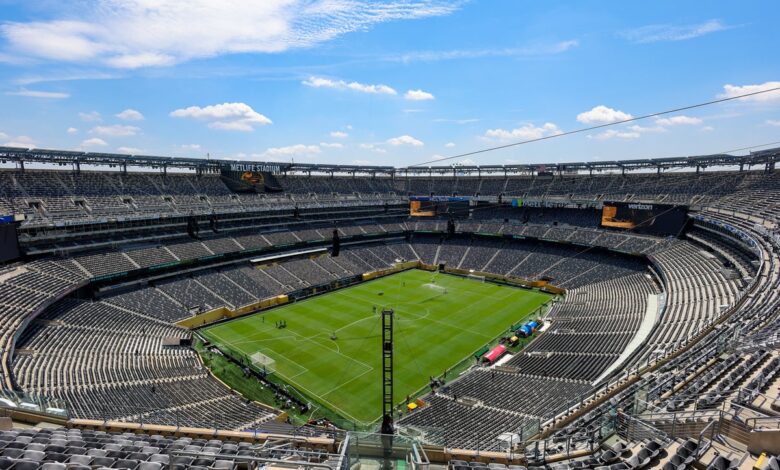
While the study noted that several cities with the highest temperatures, such as Dallas and Houston, have air conditioning in their stadiums, others don’t have proper cooling in place. The three highest-risk venues are in Miami, Kansas City and East Rutherford, N.J., which is where the final will take place on July 19. The analysis predicts a one-in-eight chance of 26-degree-C WBGT conditions and a one-in-37 chance of a 28-degree-C WBGT on that date.
This is not the first time scientists have warned that the tournament is at risk of extreme heat. A 2025 study in the International Journal of Biometeorology warned that four host cities exceed the 28-degree-C threshold more than half the time during the summer. And the last World Cup, held in Qatar in 2022, was moved from summer to winter because of the danger posed by extreme temperatures.
Mullington warned that the heat could affect the players’ performance and pose a threat to their health. He called on organizers to adopt precautionary measures during matches, such as heat breaks, shaded areas, ice towels, cold fluids, altered warm-up schedules and increased medical monitoring during matches played in hotter conditions.
Fans are also at risk, whether in stadiums or at planned outdoor events connected to the World Cup.
“Spectators are … more medically diverse, may be older or very young, may have cardiovascular disease, kidney or metabolic disease,” he said. They also have additional heat exposure while traveling to the matches. Organizers should ensure they have sufficient medical staffing, on-site access to water and shade and transport planning to deal with the threat, he added.
The U.S. last hosted the World Cup in 1994, when temperatures in the host cities were an average of 0.7 degree C cooler than they are today—a result of climate change, the researchers say.
“Our findings show conditions associated with these physiological heat-stress conditions have now become more likely and more intense than during the previous World Cup,” said Joyce Kimutai, a research associate in extreme weather and climate change at London’s Imperial College, at the same press conference. “These changes are confidently attributable to anthropogenic climate change.”
It’s Time to Stand Up for Science
If you enjoyed this article, I’d like to ask for your support. Scientific American has served as an advocate for science and industry for 180 years, and right now may be the most critical moment in that two-century history.
I’ve been a Scientific American subscriber since I was 12 years old, and it helped shape the way I look at the world. SciAm always educates and delights me, and inspires a sense of awe for our vast, beautiful universe. I hope it does that for you, too.
If you subscribe to Scientific American, you help ensure that our coverage is centered on meaningful research and discovery; that we have the resources to report on the decisions that threaten labs across the U.S.; and that we support both budding and working scientists at a time when the value of science itself too often goes unrecognized.
In return, you get essential news, captivating podcasts, brilliant infographics, can’t-miss newsletters, must-watch videos, challenging games, and the science world’s best writing and reporting. You can even gift someone a subscription.
There has never been a more important time for us to stand up and show why science matters. I hope you’ll support us in that mission.
Source link