This article appeared in the February 20, 2026 edition of The Film Comment Letter, our free weekly newsletter featuring original film criticism and writing. Sign up for the Letter here.
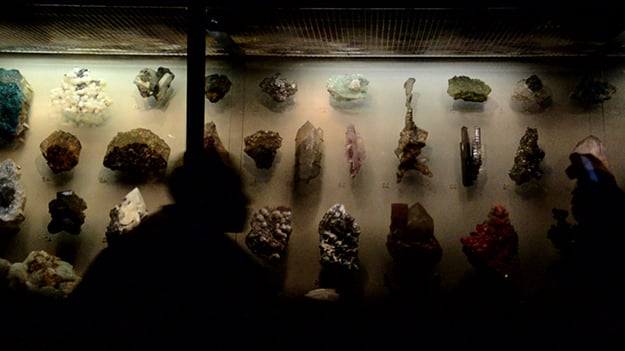
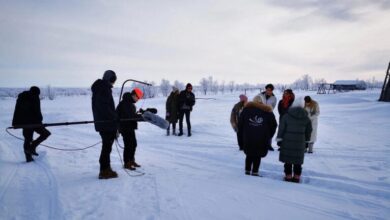
The Lanthanide Series (Erin Espelie, 2014)
For those of us who spend our time in the tiny, hermetic corner of film practice and history known as experimental cinema, there’s a good possibility that the first piece of critical writing we encountered on the subject was written by Scott MacDonald. Long before the internet helped broaden the vocabulary of film discourse, MacDonald’s scholarship offered a way into underground works that were difficult to see and even harder to understand—films that resisted easy description, let alone immediate pleasures. His prose is a rarity in academic writing: unpretentious, jargon-free, and marked by a sustained, granular attention to his subjects that few writers bring. Case in point: the first time I spoke with experimental filmmaker Ernie Gehr, he noticed I was carrying a printed copy of his interview with MacDonald from decades earlier. He told me there was little reason to ask him anything; that interview, he said, already “had it all.”
In his 40-plus years as a professor at Hamilton College in upstate New York, MacDonald’s pedagogy has influenced countless generations of students, many of whom have gone on to become filmmakers and scholars themselves. Several of them, in fact, have joined him in co-programming a series at Anthology Film Archives, running February 26–28, presented in conjunction with the recent completion of his “Avant-Doc Trilogy” of scholarly books: Avant-Doc: Intersections of Documentary and Avant-Garde Cinema (2014), The Sublimity of Document: Cinema as Diorama (2019), and Comprehending Cinema (2024).
Having spent years reading his penetrating questions posed to filmmakers like Stan Brakhage, Nathaniel Dorsky, and Carolee Schneemann, and with these commemorative screenings on the horizon, I felt it only right to turn the spotlight back on him for once. We spoke about programming the series with his students, the films he can’t avoid showing first-year undergrads, and what it truly means to “comprehend” cinema.
You frame cinema in your latest book, Comprehending Cinema, as something that should be apprehended, not necessarily consumed. What does “comprehension” demand that viewing alone does not?
Well, when I used the title “comprehending cinema” for the new book, I thought of it as a kind of pun. “Comprehending” means understanding something, but it also suggests grasping the whole of something, in this case, the world of cinema. On one level, it’s about understanding a work deeply—really getting to know it. I can’t truly get to know a new work from just one screening. I wouldn’t be able to discuss it in context or even conduct an interview based on a single viewing.
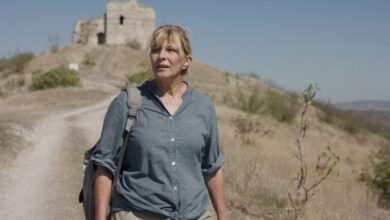
So you can comprehend an individual film, but if you’re a film scholar, and especially if you’re trained in the avant-garde, you need to see as broad a spectrum of cinema as possible. When I teach my Intro to Film course, I never teach just narrative films; that alone wouldn’t capture everything cinema is. My new book starts with Su Friedrich, then moves to Guy Maddin, and after that it gets a little all over the place. But all the diverse filmmakers in the book are worth comprehending and are genuinely interesting. Maybe more than in my Critical Cinema books, the films and filmmakers in the new book collide with each other so you don’t see what’s coming.
As someone invested in pedagogy, would you say that this breadth is part of the responsibility of being an educator, or is it more driven by your own natural interests and inclinations?
I’ve told the story so many times that it’s embarrassing to even mention it again, but I went to a screening at what is now Binghamton University in 1973 and saw a program featuring a Ken Jacobs film, a Larry Gottheim film, an Ernie Gehr film, a Stan Brakhage film, and a documentary by Richard Leacock and Joyce Chopra. I had never seen anything like these films, and I hated the screening. I was furious. I was especially furious that when the lights came up, nobody else seemed to feel they’d been jerked around the way I felt I’d been.
But I couldn’t forget the films. And teaching some of them quickly energized my teaching. So I’ve continued to look for work that drags me in, that engages me in some deeper way than entertainment does.
Do you think that sense of confusion, even anger, has pedagogical value?
Oh, absolutely. Though upset, I realized quickly that I loved the Gottheim film I saw that day [Barn Rushes, 1971]. And that was pivotal for me, because I realized that I did understand it: it’s like a Monet haystack series. I realized I could make a connection with something that was not fiction, not story, not Hollywood.
How do you approach, in practice, transmitting some of that same productive confusion and connection-making to your students?
Well, once in a while, I know I can show a film that they’ll love, but couldn’t have imagined loving. One of the most successful films I’ve ever taught is Line Describing a Cone (1973), the Anthony McCall film, where the projector beam itself is the subject of the experience. We have to do it outdoors these days, because there’s no room on campus where you can smoke. I smoke a pack of cigarettes during the film just to keep the smoke going, and I give the students incense sticks. The moment they see the smoke in the curve of the developing light cone, something happens. I hear them whispering to each other things like, “This is the most fun I’ve had at Hamilton.” It’s very, very powerful.
I think capitalism has produced so much that comes at us purely as entertainment. It’s either entertainment itself or ads promoting more entertainment. So anything I can show them that I’m confident is more deeply interesting, I try to make available. Students know how to find their way to entertainment. And they can find their way to Citizen Kane (1941), which is more than entertainment, but most can’t find their way to Line Describing a Cone.
From your experience, would you say that teaching experimental cinema is closer to training perception, or more about undoing “bad habits,” so to speak?
I think both are interlocked. When I interviewed Abbas Kiarostami while he was visiting Bard College, I mentioned that a lot of his films start with a car driving on a lonely one-lane road, and I was comparing his lonely roads to avant-garde film as opposed to “normal” film. He said in response, yes, my films are like that lonely road in the middle of nowhere, but you always have to remember where the freeway is—otherwise, you get lost.
One of the first semesters I was teaching, there was a guy teaching at a college nearby who had come out of the Binghamton program, and he was very high on Gehr, Jacobs, Gottheim, and all those people. And he was angry at me for showing Chaplin and Keaton and John Ford in class. I remember thinking, “That’s really weird, he wants the avant-garde to be the only thing I teach.” But to feel the power of those avant-garde films, you have to know something about entertainment movies and about more accomplished narrative films.
In fact, that’s where my term critical cinema came from. I don’t think avant-garde film is avant-garde; it’s critical. It follows Hollywood and reframes it—reframes the industry. For me, this is the whole point of teaching Gehr, Michael Snow, or James Benning.
We live in a world that doesn’t regularly reward the level of thoughtfulness found in your writing. How do you manage that?
I’ve done plenty of books now, and while they’re fun to do, I don’t know who buys them anymore. These days students are generally not drawn to books, so I don’t know if people still read the interviews. I’ve been trying to do pieces that combine critical text with moving-image illustration, so that the imagery you’re seeing is at least as revelatory and engaging as the text—but where to publish these is the question.
One of the things I’m trying to figure out is how I can avoid being a prisoner of the traditional book. I became a scholar and wrote books because I could serve filmmakers by drawing attention to their work that they would probably not get otherwise. I’m not confident that books do that anymore.
You’ve been teaching for several decades and have mentioned a few titles you show regularly. What else has remained a consistent fixture on your syllabi over the years?
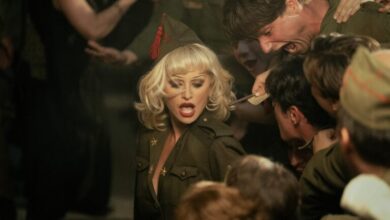
I would need to check, but I can never eliminate M (1931). I can never eliminate The Kid (1921). I can never eliminate The General (1926). I’ve now done Laura Poitras’s CITIZENFOUR (2014) fairly regularly, which is a documentary, but also a suspense thriller. I end every semester with Jonathan Demme’s Swimming to Cambodia (1987) and Carlos Adriano’s films. I do Cabaret (1972), I do Peter Kubelka, I do Bruce Baillie. It’s very much an attempt to cover as broad a territory as possible in a semester.
I’m curious how the process of co-programming this series at Anthology with some of your former students came together?
Well, they’re still treating me like I’m the professor. [Laughs]
When they said they wanted to do this, I suggested some people who would be fun to include. Erin Espelie, for example—she’s a scientist who makes beautiful films out of scientific investigations. But I wanted the other programmers to do most of the curating of what was shown. I wanted them to collaborate, to really decide what they wanted to show. And the further into it they got, the more I stepped back.
Actually, in the first program, I knew maybe a third of the films they selected. I find all the time that I don’t have any clear idea what my students have experienced in media. Your generation grew up inside digital. You were surrounded by it. It wasn’t something you had to learn—you probably knew it before you could walk or speak. I’m considering a horror-film course in the fall, where I spend the first eight or nine weeks of the semester on the history of horror as I know it, and then break the class into committees so they can show me what they think I need to see to be reasonably up to date.
If there’s one thing you hope a student takes away after completing one of your classes, what would that be?
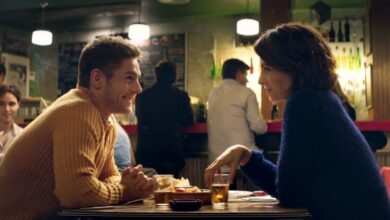
That there are different strata of films, all of which can be sources of pleasure and growth. This afternoon I’m going to see Linklater’s Blue Moon (2025), which I’ll probably like. I paid to see A Complete Unknown (2024) four times in theaters because I loved it so much. But I’m also interviewing a Korean personal documentary filmmaker, and am hoping to see the newest James Benning film, and I’m exploring Lého Galibert-Laîné’s scholarly video essays…
Knowing that all of these different cinema and media strata offer distinct experiences that are meaningful and educative, and that becoming familiar with as many kinds of these as possible makes cinema ever more exciting—for me, that’s what teaching film history is all about.
Paul Attard is a New York–based life-form whose writing on experimental cinema has also appeared in MUBI Notebook and Screen Slate.
Source link