
This story gives you a peek at the content coming to our new platform, TRD Policy Pro. Sign up to get early access here.
Hi there, let’s get into a special edition of PolicyPro with insights from speakers at The Real Deal‘s NYC Real Estate Forum today, along with some news at the intersection of policy and real estate:
- State Sen. Patricia Faye rolls out an upstate pied-à-terre tax bill — with a notably lower threshold.
- Two of the city’s top residential brokerage leaders — and competitors — say they’ve teamed up to oppose the proposed pied-à-terre tax.
- Related Companies CEO Jeff Blau weighs in on the future of NYCHA.
- NYC Deputy Mayor for Housing and Planning Leila Bozorg on the challenge of overhauling the city’s property tax system while keeping it revenue neutral.
In this edition we mention: State Sen. Patricia Faye, Brown Harris Stevens CEO Bess Freedman, The Corcoran Group President and CEO Pamela Liebman, Related Companies CEO Jeff Blau, NYC Deputy Mayor for Housing and Planning Leila Bozorg and others.
We Heard
- Upstate pied-à-terre tax nuts and bolts: After weeks of telegraphing the move, Albany State Sen. Patricia Faye on Tuesday introduced a bill that enables municipalities outside New York City to impose a pied-à-terre tax on second homes — at a significantly lower threshold than the governor’s five-borough pitch. The levy would hit properties where neither the owner nor a relative claims primary residence, or where the home is rented out full-time. Faye’s bill targets one-, two- and three-family homes valued at $2.5 million and up to $5 million, instead of the $5 million or more threshold floated by Gov. Kathy Hochul for the city. Valuations would hinge on a five-year average, based on market value across the prior five assessment rolls. Rates would range from 0.5 percent to 4 percent, with municipalities free to set a graduated scale, depending on how local governments design the fee. Local governments would collect the tax like any other property levy, working with the state Department of Taxation and Finance to verify primary residence status. Revenue would be split evenly between municipalities and the state’s Aid and Incentives for Municipalities program, which provides financial aid to support local government operations. Fahy said the structure is meant to channel dollars from second homes in vacation hubs like the Hamptons, Saratoga Springs and Lake George to immediately surrounding communities that lack such properties but need the revenue. “We’re trying to make the case that upstate towns, villages and cities have serious needs as well,” said Fahy. Hochul has said she won’t put the measure in the state budget, but that she’s open to a closer look. Opposition is already mounting. Some real estate professionals and Albany Republicans warn an upstate pied-à-terre tax would add another cost that could push investment out of New York. Empire Center senior fellow Bill Hammond argues that high-end second homes already serve as “cash cows” for upstate resort markets, paying full property taxes while using few services — and points to the second home market beyond New York City and a handful of vacation hubs as too limited to generate meaningful revenue for smaller struggling cities.
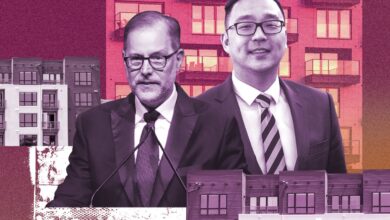
- Brokerage blowback: Two of the city’s top residential brokerage leaders have teamed up to fight the proposed pied-à-terre tax, warning it could rattle the already-sensitive luxury market. Brown Harris Stevens CEO Bess Freedman and The Corcoran Group President and CEO Pamela Liebman said Wednesday at The Real Deal’s NYC Real Estate Forum that they’ve joined forces — along with Real Estate Board of New York President James Whelan — to lobby against the measure. “It makes people feel like they’re not welcome, like we don’t want you,” said Freedman. “It’s not a good message to a city that’s still trying to get it together post-Covid.” She called the proposal a “feel-good tax” for elected officials looking to saddle high-earners with larger levies, but one that will be “very hard to administer,” echoing a key issue that derailed a similar 2019 effort. Liebman said the mere prospect of the tax is already freezing activity at the high end. “We have so many deals that have been put on pause, particularly at the $30, $40 million level, that are just wait and see,” said Liebman. “I’ve only seen two big deals close above $25 million since this happened.” The pair urged real estate professionals to contact their state representatives and push back on the proposal.
- Reviving NYHCA: Also at the Forum Wednesday, Related Companies CEO Jeff Blau is casting the firm’s controversial Chelsea public housing overhaul as a high-stakes “test model for the future of NYCHA.” The $1.2 billion plan would raze 18 NYCHA buildings across the Fulton, Elliott and Chelsea Houses, replacing them with six high-rises and allowing current residents to return. To make the numbers work, the city cut a deal to add nine mixed-income buildings, yielding roughly 2,500 luxury units and 1,000 income-restricted apartments — a potential windfall for Related Companies and Essence Development. “If we do this right, which we will, I think this will be a model for all of the NYCHA redevelopments,” said Blau. He pointed to a lack of federal and state funding to tackle NYCHA’s more than $80 million repair backlog, making private development partnerships key. Mayor Mamdani backs the plan as a way to ease the housing crunch and generate funding for public housing. Mayor Mamdani backs the plan as a way to unlock housing supply and new revenue for public housing. But not everyone is on board. Tenant advocates and community groups remain skeptical of private developers’ role in redeveloping public housing, and legal challenges are already slowing progress — a state court paused the plan in April, with the hold expected to last at least through June.
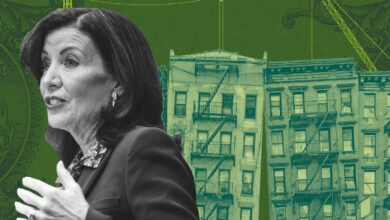
- Tax winners and losers: Across the political spectrum there’s a rare consensus: the city’s property tax system is a mess — convoluted, inequitable and long overdue for a fix. On the campaign trail, then-candidate Mamdani promised an across-the-board overhaul. Five months into his term, we’re waiting on a blueprint. Any shake-up, though, comes with strings. To keep city revenues steady, reforms would have to be revenue neutral — shifting the tax burden rather than shrinking it overall, said New York City’s Deputy Mayor for Housing and Planning Leila Bozorg. “There’s winners and losers today, and if you change the system there will be winners and losers with whatever proposal we come out with,” said Bozorg during the TRD Forum. That political math has stalled action for decades. No administration has wanted to be the one to pick sides. “There’s broad agreement that this is an issue that really does need to change and has greatly impacted a lot of our housing challenges,” she added, “but it’s very challenging politically.”
Have a tip or feedback? Reach me at caroline.spivack@therealdeal.com.
Bill Tracker
| Bill Number | Lead Sponsor(s) | Summary | Committee | Last Action Date / Status | Next Scheduled Event |
| S10197 | State Sen. Patricia Fahy | Authorizes municipalities outside of NYC to impose a tax on second homes | Referred to local government | May 5 | None yet |
The Catch-Up
Gov. Kathy Hochul is touting a record year of homebuilding with the state well ahead of its 100,000-unit target, but experts say a deep housing shortage persists after decades of underbuilding and surging demand, Times Union reports.
Two-thirds of New York City hotel owners surveyed report softer-than-expected World Cup bookings, according to a new survey by the American Hotel & Lodging Association, reports Gothamist.
Trump is privately raising concerns with a Senate-approved housing bill that his White House previously supported. The president doesn’t support a provision that requires large landlords to sell single-family homes built as long-term rentals after seven years, reports Politico.
Opportunity zones are in limbo as investors look less than a year down the road and see a shining, permanent, new program offering the same, or better, incentives, reports Bisnow.
The Kicker
“We are very focused on how to drive down the cost of building housing, which is getting, frankly, untenably expensive,” said Dina Levy, the Commissioner of the New York City Department of Housing Preservation and Development at the NYC Real Estate Forum.
Read more

What NYC can learn from other cities with pied-à-terre taxes

Court temporarily blocks NYCHA, Related’s West Chelsea redevelopment — again

“Winners and losers”: What if Mamdani finally reforms NYC property taxes?