This article appeared in the March 13, 2026 edition of The Film Comment Letter, our free weekly newsletter featuring original film criticism and writing. Sign up for the Letter here.
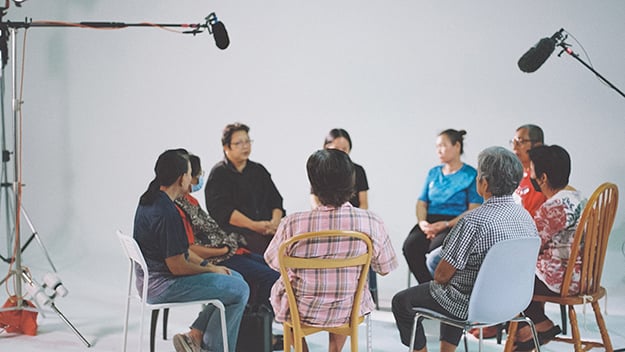
Narrative (Anocha Suwichakornpong, 2025)
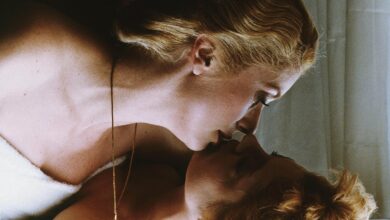
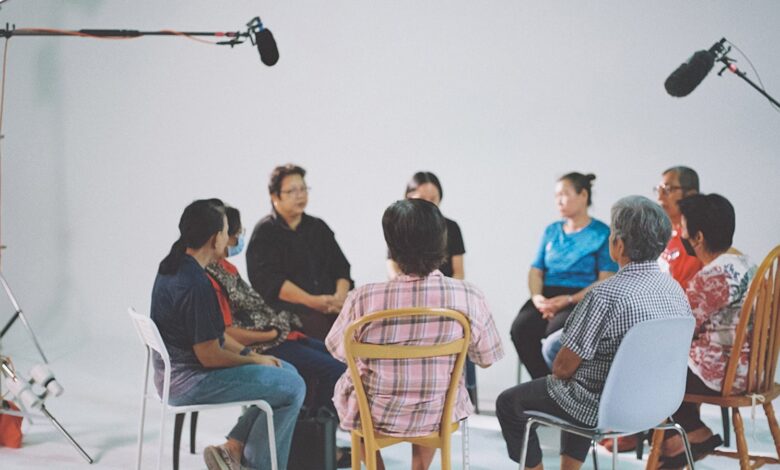
At the core of Anocha Suwichakornpong’s Narrative (2025) is a theatrical workshop staged with the family members of pro-democracy activists—“Red Shirts”—killed during the Thai military government’s 2010 crackdown on protestors. On a studio soundstage, the workshop director guides pairs of participants through a series of conversational exercises designed to facilitate immersion in one another’s emotional experiences. We see, but do not fully hear, the participants speaking; Suwichakornpong cuts away before the exercises are complete. Later, on the same soundstage, the theater workshop gives way to a legal consultation. Sharing their stories with a lawyer, family members detail the bureaucratic obfuscation and stalling that have left their cases against the state unresolved. These scenes are intermittently punctuated by glimpses of the production crew, who dart in and out of frame to adjust boom mics and cameras, and of Suwichakornpong herself, who sits off to the side and watches the action unfold. The film invites us to question how, and if, such performances can materialize emotional or political resolution.
Narrative screened in the 2026 edition of the Museum of Modern Art’s Doc Fortnight, which ran from February 23 to March 12. Other films in the lineup were similarly defined as much by what they left out as by what was contained within them. While such work can risk becoming hermetic, overpowered by the weight of its omissions, many of the titles programmed in the festival instead opened lines of flight beyond the boundaries of a given film and back into the shared social and historical world to which they—and we—belong. Narrative may question Thailand’s ability to reckon with the residues of its traumatic past, but it ultimately attests to the resilience of ongoing individual and collective efforts to inherit this struggle in the present. The film lingers on a group lighting incense and praying together for their lost loved ones at a Buddhist shrine, a mother’s dream journal in which she writes of her dead son visiting her in her sleep, and audio recorded at a memorial gathering, chronicling the myriad forms through which memory is haltingly, but insistently, sustained.
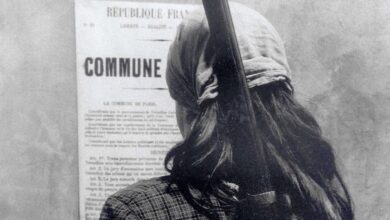
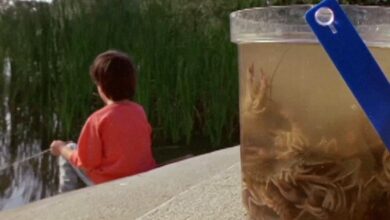
Several short films in this year’s Doc Fortnight embodied this spirit of openness by inviting viewers into new sensory and imaginative encounters with place. Tulapop Saenjaroen’s Local Sensations (2025) uses Thai architecture scholar Chatri Prakitnonthakan’s essay “How to Design a Modern Monument That Won’t Become a Shrine” as a playful point of departure to explore different ways of inhabiting space; the director restlessly recombines footage of an improvised musical performance, a glassblowing workshop, a walk through a nature center, and a drawing game amongst architecture students. Mark Jenkin’s Enough to Fill Up an Eggcup (2016) and Rhea Storr’s Okay Keskidee! Let Me See Inside (2025) similarly utilize the expressive capacities of analog film—its lush sensitivity to light, texture, and color—to attune viewers to overlooked and vulnerable landscapes. For Jenkin, it’s a Cornish fishing village whose seaside landscapes and livelihoods are increasingly threatened by rising sea levels and intensifying storms. For Storr, it’s the site of the former Keskidee Centre, a hub of Caribbean diasporic organizing and cultural production in the U.K. in the 1970s and ’80s that is now the site of a luxury apartment development. Unable to go inside, Storr’s film instead meditates on imaginative possibilities of “surface” itself through light leaks, patterns left by chemical emulsion, kaleidoscopic refractions, and optically printed text overlaying quotidian footage of diasporic neighborhoods.
Ross McElwee’s Remake (2025) is an aching reflection on the director’s relationship with his son Adrian—which was often mediated by filmmaking—and the events leading up to Adrian’s death in 2016 from a drug overdose. Narrated primarily as an address to Adrian, the film organizes these reflections along a timeline that also retraces the failed attempt by L.A. producers to develop McElwee’s personal documentary Sherman’s March (1985) into a narrative feature. “I used to call myself a filmmaker. I used to call myself your father,” McElwee states via voiceover, naming a life doubly undone by loss. In what form might such a shattered self be remade?
Perhaps, Remake suggests, in the eyes of a viewer. Over the course of the film, McElwee revisits not only his own footage but also the footage Adrian shot over his short life. The elder McElwee’s attempt to view the world through his son’s eyes occasions his most anguished reflections on all that his own camera failed to see, but the resulting work is a tender tribute to the complexity and vitality of Adrian’s relationship to the world around him. Near the end of the film, McElwee worries that such endless looking will make his son “seem like a fictional character—someone who never existed, except on film.” However, if cinema is not a substitute for life, it is, for both McElwee and Adrian, a conduit to it—a way of encountering oneself, and one another.
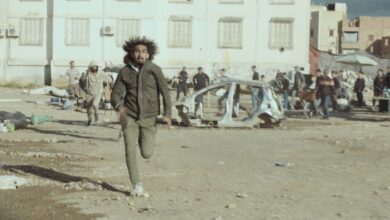
Bani Khoshnoudi’s The Vanishing Point (2025) also excavates a painful family history—the story of her mother’s cousin Nasanine, who was arrested and executed in Iran in 1988 during Ayatollah Khomeini’s bloody wave of political purges. After her death, Nasanine’s parents were met by prison officials with a plastic bag containing a few scattered belongings and “a threat to be silent.” The film traces the reverberations of such enforced forgetting, weaving together Nasanine’s story with Khoshnoudi and her family’s own fractured memories of exile from Iran after the revolution. In dwelling on the scant artifacts her family members took with them and the street footage she filmed upon her successive returns to Iran, Khoshnoudi conceals as much as she reveals, favoring cropped framings, elliptical narration, and long stretches of silent footage. Such gestures evoke the climate of fear and internalized censorship named in Iranian poet Ahmad Shamlou’s 1972 poem Nocturnal, which opens the film: “No one talks to anyone/ For silence is speaking/ in a thousand tongues/ We gaze upon our dead/ with a vague trace of a smile/ And we wait/ for our turn to come/ with no smile!”
Yet the film also revises the resignation suggested by Shamlou’s lines, gradually unearthing long histories of dissent against the Islamic regime. After a montage of video and cell-phone footage documenting mass protests in Iran, the film ends with a haunting audio recording from 2023 of women singing together in Evin prison, echoing earlier footage in which families of those disappeared by the regime gather and sing in protest around a mass grave. Shamlou’s thousand-tongued silence gives way to a thousand-tongued voice of defiance, emblematic of the film’s broader shift from a personal reflection on absence to a collective history of action.
The Vanishing Point held its U.S. premiere mere days after the U.S. and Israel jointly initiated war on Iran, cynically appropriating Iranian dissent to sanction the brutal extension of their military agendas. Watching the film, I thought about the Iranians reporting on the destruction of their homes amidst a near-total internet blackout. I thought, too, of the crowds in Los Angeles and Minneapolis facing down ICE abductions, and those presently taking to the streets to demand an end to our forever wars abroad. Their astonishing bravery in confronting authoritarian violence reverberates across our ever-expanding archive of footage documented via phones and cameras, but their demand exceeds the boundaries of these frames. They push us not merely to watch our screens, but to fight for the world beyond them.
Katie Kirkland is an Assistant Professor of Cinema at Binghamton University.
Source link