This article is part of Film Comment’s Best of 2025 coverage. Read all the lists here.

Sound of the Mountain (Mikio Naruse, 1954)
The dozen or so theaters that regularly offer repertory programming in New York afford a vantage on a vast moviegoing landscape that can be traversed nonstop. Here everything old is new again—what former Film Comment editor Richard T. Jameson used to refer to as cinema’s “eternal present.” The complexion of the big-screen experience has never looked better in my 40 years as a bonkers all-you-can-eat viewer. Some say it’s a fire sale but tell that to the kids on letterboxd and the contributors to Screen Slate’s annual film poll, where first viewings, retrieved from 125 years of film history, count as much as—or maybe more than—2025’s official releases. In that spirit, here are ten Halley’s Comets that I’ve been waiting my whole cinephile life to see, or which weren’t even on my radar until this year.
The Last Valley (James Clavell, 1971)
“Michael Caine: A Shock of Recognition,” August 7–September 8, Museum of Modern Art
The Anglo-American author of Shogun, screenwriter and novelist Clavell proves to be a masterful filmmaker in this rousing historical drama, his sixth and last theatrical directorial credit. Michael Caine, in one his best performances, plays the ruthless but rational leader of a 17th-century Protestant German mercenary company that discovers an idyllic village untouched by the depredations of the Thirty Years’ War.
Rape of Love (L’Amour violé) (Yannick Bellon, 1978)
“Yannick Bellon: The Happy Pessimist,” July 8–July 29, Cinema at L’Alliance New York
One of France’s unsung post–New Wave filmmakers, Bellon (1924-2019) made eight theatrical features; the three I’ve seen are all grounded in more or less unsentimental feminist sexual politics. Here she tackles the issue of rape and its aftermath: when a nurse (Nathalie Nell) is raped by four men, she resolves to track them down and have them prosecuted. Bellon calmly leads the viewer through the legal system’s mechanisms as her protagonist’s attackers (presented as pathetic prole dolts rather than ogres) are brought to justice. The film is a model of matter-of-fact simplicity, studiously avoiding melodrama and sensationalism.
The Holy Inquisition (Arturo Ripstein, 1974)
“Without Limits: The Films of Arturo Ripstein,” Oct 24–Oct 30, Brooklyn Academy of Music
This unjustly lesser-known work by Mexico’s iconoclastic elder statesman details the destruction of a clandestine Jewish family by the Spanish Inquisition. Its harrowingly exacting reenactment of the logic, techniques, and rituals of the auto-da-fé has to be seen to be believed.
Sound of the Mountain (Mikio Naruse, 1954)
“Mikio Naruse: The World Betrays Us,” May 9–June 29, Japan Society & Metrograph
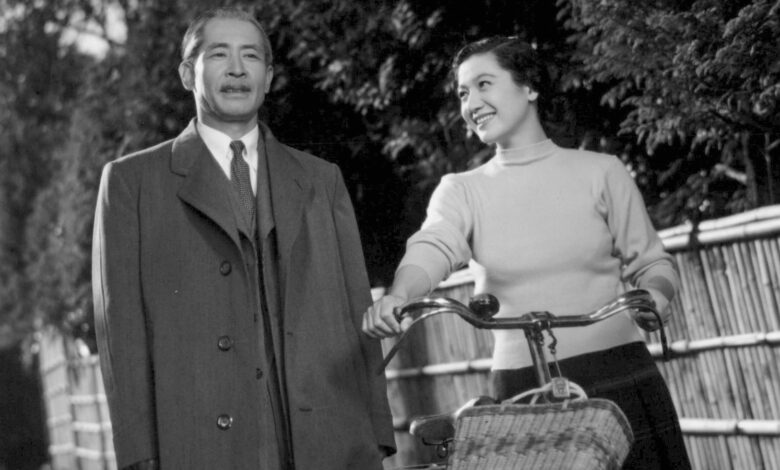
A highlight of Naruse’s marriage-cycle films that atypically focuses on a middle-class milieu, Sound of the Mountain pivots on the relationship between Kikuko (Setsuko Hara), whose husband is pursuing an extramarital affair, and her father-in-law, Shingo (Sô Yamamura), who is tacitly sympathetic to her plight. Kikuko’s endurance and absolute dedication to her family role, and the quiet negotiation of emotional entanglements, social constraints, and implicit obligations, make for truly riveting, heartbreaking viewing.
Napoleon (Abel Gance, 1927)
“Kevin Brownlow,” October 24–November 6, Film Forum
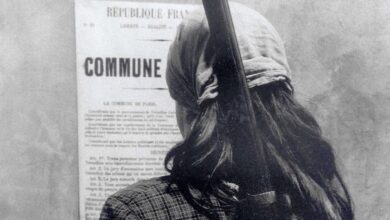
Not screened in NYC since its legendary 1981 run at Radio City Music Hall, Gance’s spectacular portrait of Napoleon’s early triumphs returned this fall—preceded by its reputation—as part of a series spotlighting filmmaker and historian Kevin Brownlow’s own works, those he was instrumental in restoring, and some that inspired him. Gance’s 330-minute marathon is, of course, visually stunning, never more so than in its triptych finale; throughout, Gance scatters his monumental narrative with dazzling experimental devices way ahead of their time, deploying split-screen, superimposition, and a host of other techniques to beguiling effect.
Gunman’s Walk (Phil Karlson, 1958)
“To Save and Project: The 21st MoMA International Festival of Film Preservation,” January 9–January 30, Museum of Modern Art
In Karlson’s fascinating western psychodrama, the biblical morality of upstanding rancher and patriarch Van Heflin clashes with the temperamental, violent ways of his older son (played with unexpected conviction by teen idol Tab Hunter), who’s determined to prove himself. After Hunter is acquitted of deliberately causing the death of a half-Indigenous hired hand, father and son become locked into an inexorable collision course. Karlson hacked a path through postwar genre films with brutal vigor, and here he drives the action with a remorseless, almost melodramatic force to its take-no-prisoners finale.
The Queen of Spades (Thorold Dickinson, 1949)
“Conjuring Nosferatu: Robert Eggers Presents,” February 5–February 9, Film at Lincoln Center
This haunting drama of cruel intrigue and diabolical doom adapted from a short story by Alexander Pushkin came as a revelation. Set in Imperial Russia, the film charts the fortunes of an ambitious army officer and gambler (Anton Walbrook), ultimately destroyed after his murderous theft of the secret of a countess (Dame Edith Evans) whose pact with the Devil enables her to win every card game. Taking full advantage of its lavish production values, The Queen of Spades achieves an incredibly somber richness and sinister romantic atmosphere that sets it apart from the storied costume-drama tradition of postwar British cinema.
The Shootist (Don Siegel, 1976)
“Don Siegel: Last of the Independents,” September 5–November 3, Metrograph
Jean Cocteau’s dictum “cinema is death at work,” literalized: both John Wayne and the character he plays are dying of cancer in this elegiac western, set in 1901 in a town where the signs of modernity abound. As the protagonist faces his mortality, he cannot leave behind his status as a legendary gunfighter, leading to an inevitable four-way showdown staged by Siegel with his customary dynamism.
The Flame of New Orleans (René Clair, 1941)
“René Clair,” March 21–April 3, Film Forum
Clair’s underrated film—the first of his American sojourn—is a lively romantic farce, set in the 19th century, which gives Marlene Dietrich the opportunity to have delightfully knowing fun as a European grifter who poses as a countess in order to reel in and marry a respectable American banker (Roland Young). Finding herself sidetracked by the charms of a ship’s captain (Bruce Cabot), she assumes a second identity as the countess’s bad-girl cousin. Clair handles the requisite identity-switching hijinks and light social satire with superior stylistic elegance and wit.
Primate (Frederick Wiseman, 1974)
“Frederick Wiseman: An American Institution,” January 31–March 5, Film at Lincoln Center
The administration of the criminally insane in 1967’s Titicut Follies is analogous to the treatment of the monkeys Wiseman documents in his eighth feature, right down to the behavior modification. These inmates are objects of pure scientific research—although “pure” seems inapposite to the grotesque procedures that are performed in the Yerkes Regional Primate Research Center. The purposes of the experiments we see often remain mysterious—none more so than in Primate’s grand space-age finale. The final video-screen shots of a stoic monkey in the zero-gravity environment of a diving USAF jet, alongside scientists absurdly floating in midair, may be the most indelible image I saw last year.
Gavin Smith is an editor emeritus of Film Comment.
Source link